Penicillin mixed with water may turn out to be an effective way to remove oil spills from soil.
“It’s not the same penicillin that we use as an antibiotic, but another variant,” says Marcel Moura, a physics researcher at the University of Oslo. Together with colleagues in the United States, he has taken part in experiments where oil is removed with the help of living fungi.

Bacteria are better known
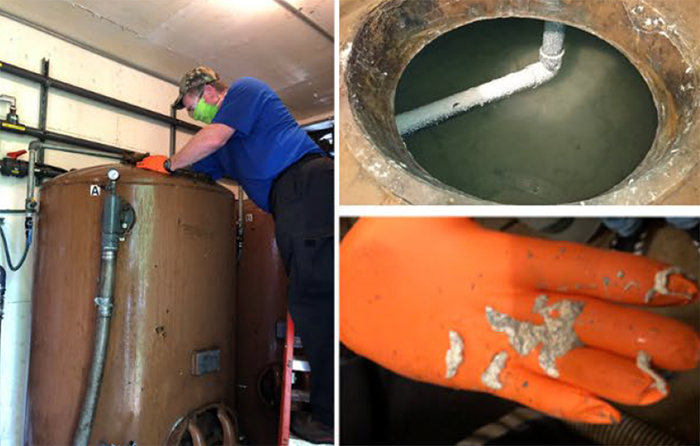
The fungus they used in the experiments was found on the University of Minnesota campus, where an old oil spill threatened the university library’s underground storage. The fungus is a species of Penicillium and has filamentous growth.
Such fungi are crucial in many processes, both natural and man-made, but the mechanisms are not well understood. Gaining more insight will make it easier to use fungi for, for example, biological clean-up.
A lot of attention has been directed toward how bacteria can contribute to, for instance, wastewater treatment, while fungi have so far attracted little interest.
“I believe the fungus we have studied has also the potential to be used to clean soil contaminated by oil spills,” says Moura.
Lab experiments as a model
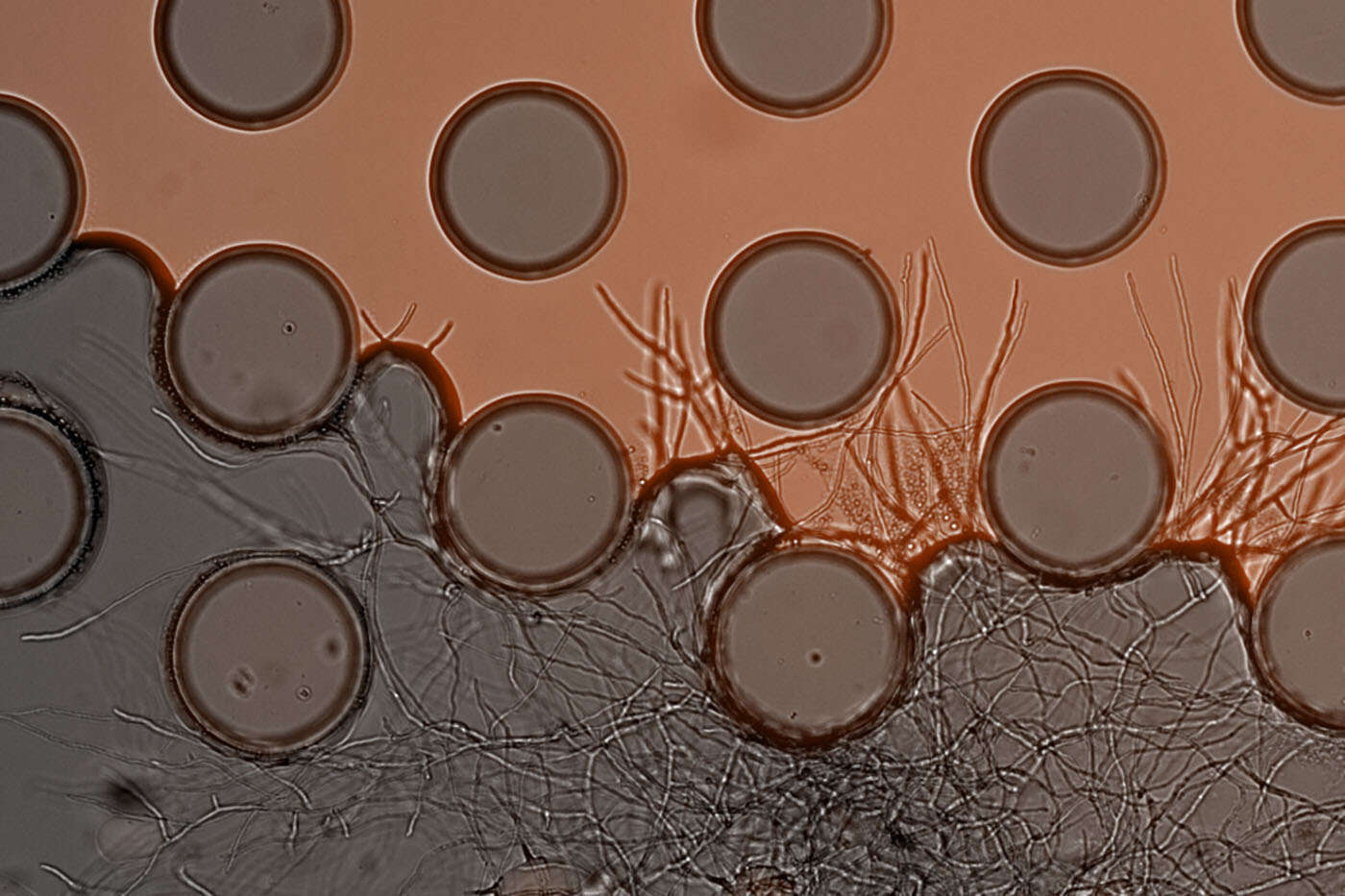
To take a closer look at what happens, the researchers created a model setup in the form of a chip made from a silicone-based plastic material, where a pattern of small cylindrical pillars represents the soil structure. They then filled the chip with oil.
A channel without pillars also runs through the chip. It can be like that in reality too, Moura explains: contaminated soil can contain both larger cracks and smaller pores that affect how fluids flow through it.
When the researchers tried to pump water through the chip, the water, as expected, took the easiest route through the wide channel, while the oil remained behind.
But look what happened when the researchers mixed fungi into the water:
“The fungus grows and blocks the main channel. This forces the water into the small pores, displacing the oil,” says Moura.
Sang Hyun Lee, who led the experimental campaign and now works at the University of Massachusetts Amherst, says he is working with local environmental consultants to scale up the process and demonstrate the phenomenon in a more realistic setting.
“I believe our findings could have implications both in the energy sector—for example for oil recovery and carbon storage—as well as for oil-spill cleanup and in agriculture,” he says.
The work originated in the research group led by Prof. Peter Kang at the University of Minnesota. Prof. Kang served as principal investigator and is the corresponding author of the article. The project also involved Dr. Shreya Srivastava and Prof. Cara Santelli, both from the University of Minnesota.
Scientific article:
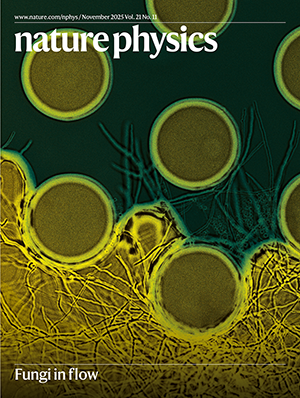
Lee, S.H., Moura, M., Srivastava, S., Santelli, C. & Kang, P.K. Filamentous fungi control multiphase flow and fluid distribution in porous media Nature Physics 21 (2025)
The article has been translated into English with the help of the GPT UiO language model and quality checked with the help of the academic staff.


