Published
Jan. 29, 2021 12:00 AM
What is the similarity between "Murder on the Orient Express" and the Grignard reaction? “All the suspects were guilty”, say two researchers.
What is the similarity between "Murder on the Orient Express" and the Grignard reaction? “All the suspects were guilty”, say two researchers.
Thanks to advanced technology, and by knocking out an aircraft window, satellites can now follow vital chemistry in the atmosphere.
Green energy: Thermochemical storage can utilize heat from the industry that otherwise disappears into the atmosphere.
In seven short steps: New answers to why the corona and the photosphere of stars have different compositions.
Researchers have zoomed in on Greenland to see how much of the ice cap will melt by the year 2100. The answer: More than previously thought.
Covid-19 can be fought with interventions aimed at reducing community transmission and international travel by 80 % for eight weeks, according to new report.
As the ice in the clouds melts into droplets, they reflect more sunlight. But in the end there is no more ice left to melt.
Satellite and tracking data can help provide a safer climbing route up the dangerous Khumbu Icefall of the world's highest mountain.
Physicists have created a digital art exhibition so that everyone can see the beautiful images that emerge in physical experiments and theories.
The population on Rapa Nui didn't crash because the Europeans came. Nor did they live in idyllic equilibrium with nature for centuries.
When Los Chocoyos in Guatemala erupted 84,000 years ago, emissions of sulfur and chlorine may have affected the climate for decades.
Killer whales along the Norwegian coast have long classified as fish-eaters. New research shows that some of them also eat seals - and accumulate large amounts of harmful pollutants.
The desire to create the perfect computer game can be an obstacle to growth in the Norwegian gaming industry, says researcher Hrafnhildur Jónasdóttir.
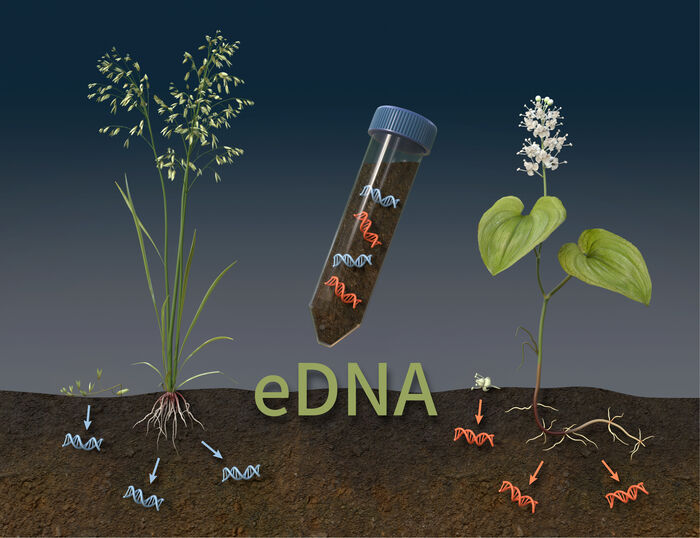
UiO researchers have shown that nature types on land can be mapped by analyzing their residual DNA in soil samples. This new method can detect plant species overlooked by even the best field biologists.
With energy from the sun, a special enzyme can convert CO2 molecules into formic acid. This can both remove CO2 and provide us with something more useful.
A robotic vacuum cleaner is easy to trust. We really need a lot more confidence in a robot that might be performing vital surgery on our body.
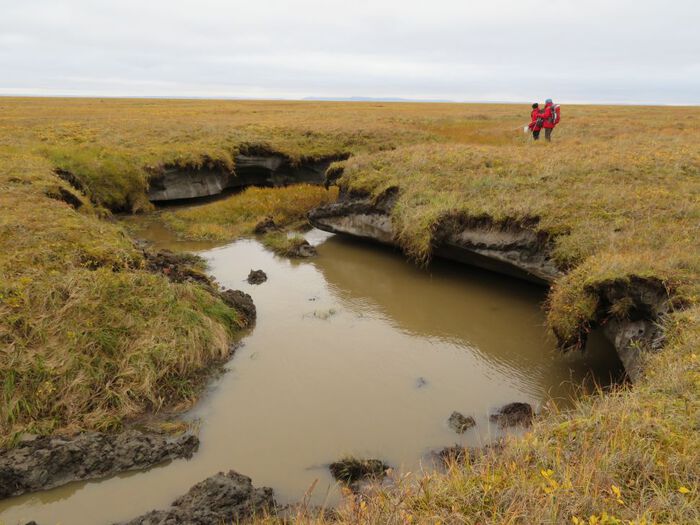
Melting of ice in permafrost ground leads to processes of change in the landscape – thermokarst. This may cause faster thawing of the permafrost.
The Third Plague Pandemic in Europe stopped with the introduction of insecticide and improved personal and environmental hygiene, explains Barbara Bramanti.
The planless evolution of the human body has resulted in a lot of flaws that make it impossible to believe that an intelligent designer is responsible. "The human body is even constructed so poorly that it becomes dangerous to eat and give childbirth", says Professor Glenn-Peter Sætre at the University of Oslo.
Researchers at the University of Oslo have developed a new and better tool when making forecasts for bowel cancer patients.
Improved calculations reveal that bird species go extinct five times faster than previously thought, and about 1000 times faster than in the absence of human activity. The good news is that conservation helps – it has reduced the rate of extinction by as much as 40 percent.
“Academics should stop worrying too much about indices", says Professor Colin Chapman from the George Washington University. Professor Nils Chr. Stenseth at the University of Oslo agrees: "The scientific journals' obsessive use of indices is damaging the quality of science", he says.
Through all these years the Grignard reaction has been universally recognized, taught in all basic chemistry courses and extensively used, and still today it shapes the world of organic chemistry. But it has never been fully understood.
The coldest ground on the Earth is found in the Transantarctic Mountains. This is revealed in a new map developed by researchers from UiO.
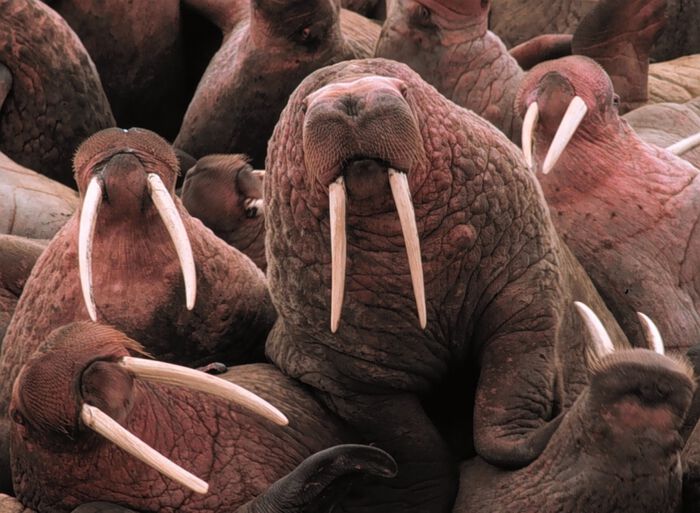
The Norse settlements on Greenland was founded by Erik the Red around 985 and lasted almost 500 years. New research show that the settlers hunted walrus and traded tusks and ivory across Europe during the Middle Ages, but the hunt became so intense that it may have led to the collapse of Norse Greenland.





.JPG?alt=listing)

.jpg?alt=listing)